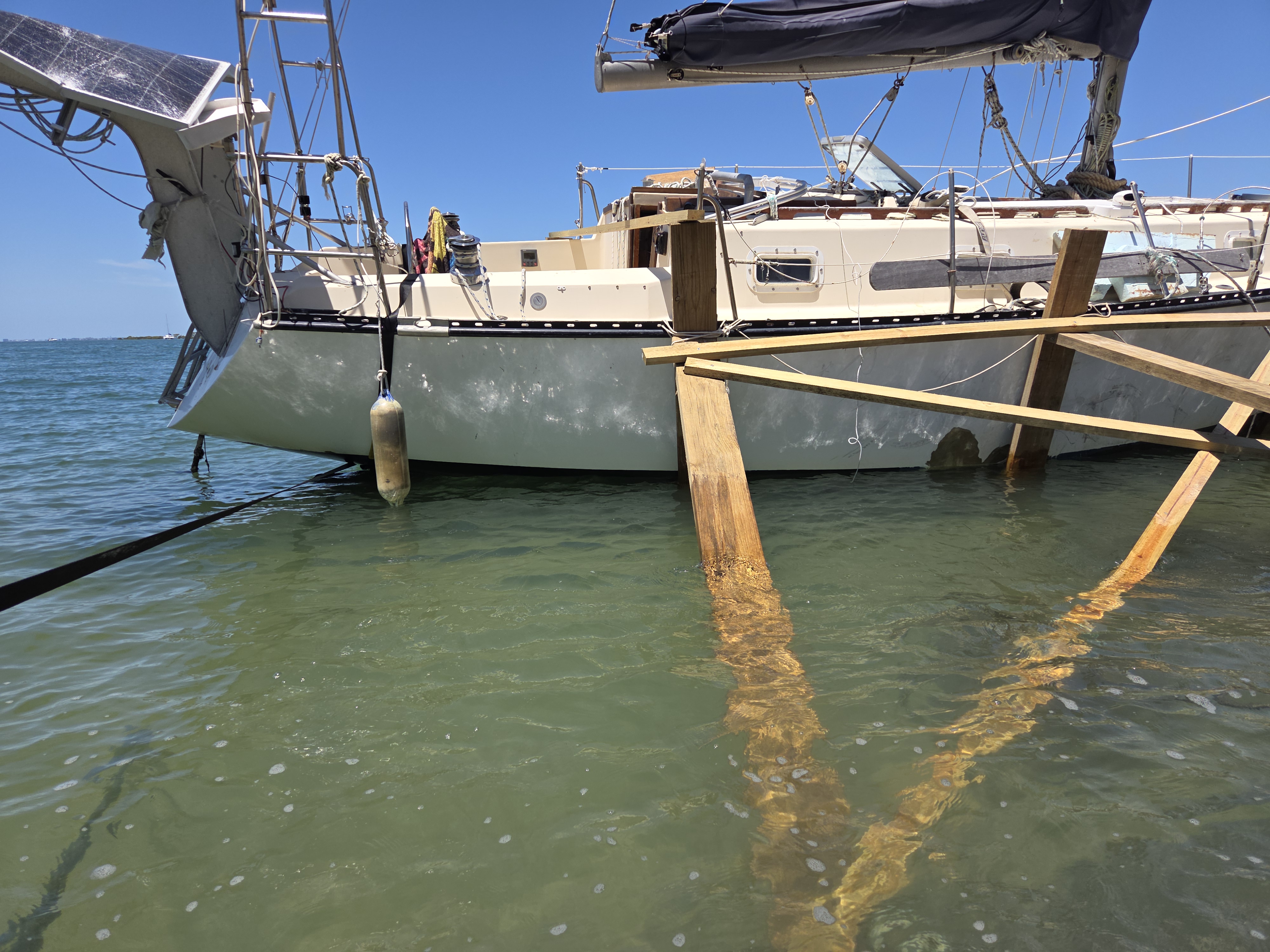
Pumicestone Passage, November 2025. The Bribie Island bridge visible in the background — the same bridge that would have taken the mast had the tide been flowing the other way.
"There was no alert. No warning. No SMS. Just a phone call telling me my boat was on the rocks."
The repairs would take weeks. The financial cost was significant. But what stayed with me — what I couldn't set aside — was simpler than the damage bill.
I had no way of knowing, in real time, that my vessel had left its mooring. A single SMS the moment the GPS moved outside a defined radius would have given me a chance to act before she reached the shore. That technology existed. I just didn't have it fitted.
That is the moment BoatMind was born.
Stage one · What we could see from the shore

The community rallied. Car tyres rigged as makeshift fenders to stop the hull grinding further against the granite while we worked out how to get her off.

The full scale of the grounding. Hard against the rock wall, listing at an angle no boat should ever sit. What we could see above the waterline was bad enough.
The damage visible from the shore was confronting — hull pressed against granite, the waterline scraping with every swell. We rigged what we could and focused on getting her off the rocks before the tide and the weather made things worse.
It was only once we had her standing upright on a temporary platform — once we could actually get underneath her — that we understood what had happened below the waterline.
Stage two · What we discovered underneath
The damage on the rocks was bad enough.
But below the waterline, it was worse.
There were penetrations. Not scrapes. Not grazes. Holes you could see through.
You think you know how bad it is. Then you get underneath, and you find out it's worse.
Below the waterline · Only visible once she was upright on the platform
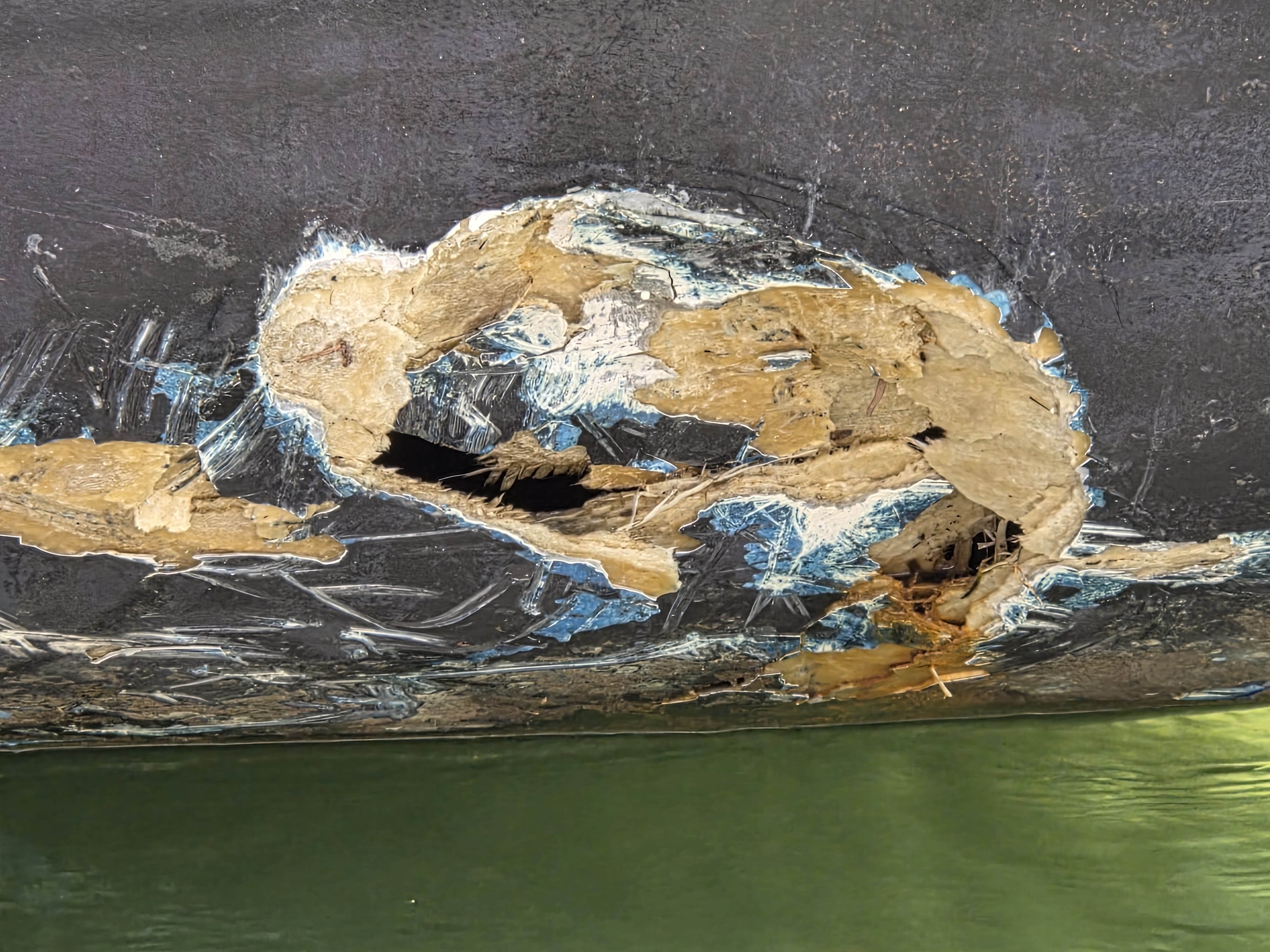
A hole through the hull. Fibreglass layers peeled back, the internal structure exposed. This was below the waterline — completely invisible from the shore until she was upright on the platform.
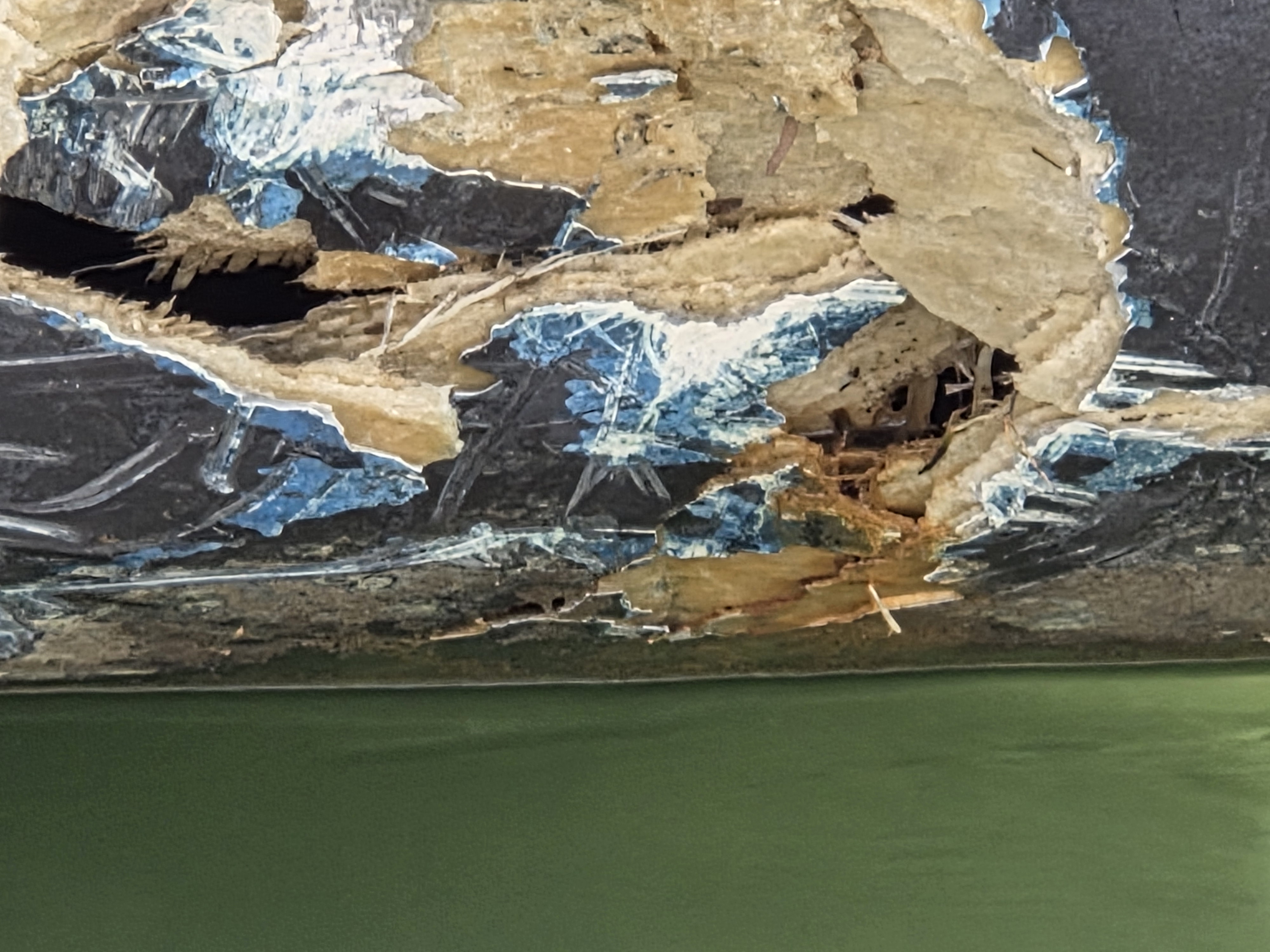
A second penetration point at the waterline. Not one impact — multiple. The true extent of the damage only became clear once she was standing upright.
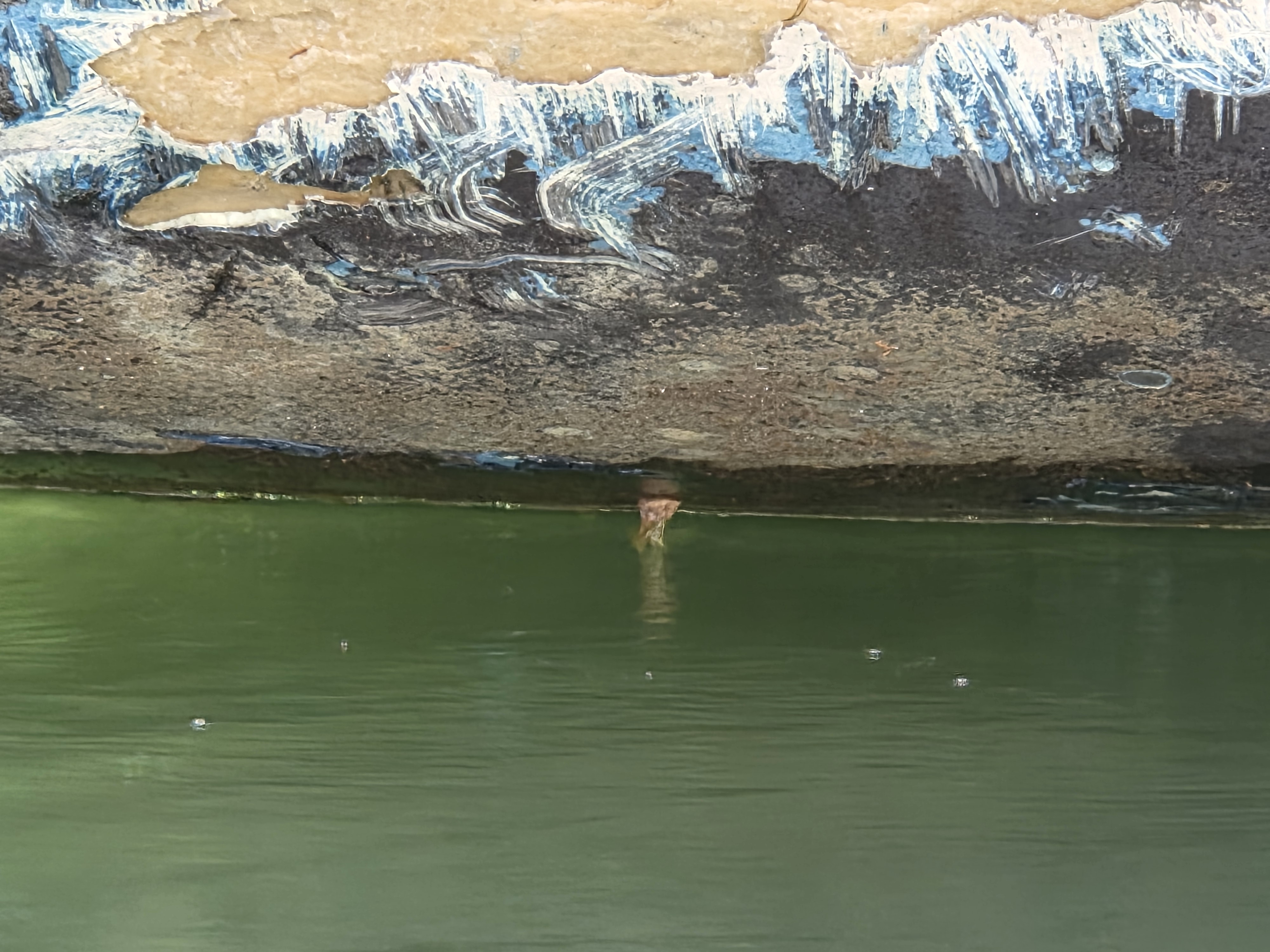
Looking along the underside at the waterline after refloat. She was back in the water before the full extent of the below-waterline damage was completely understood.
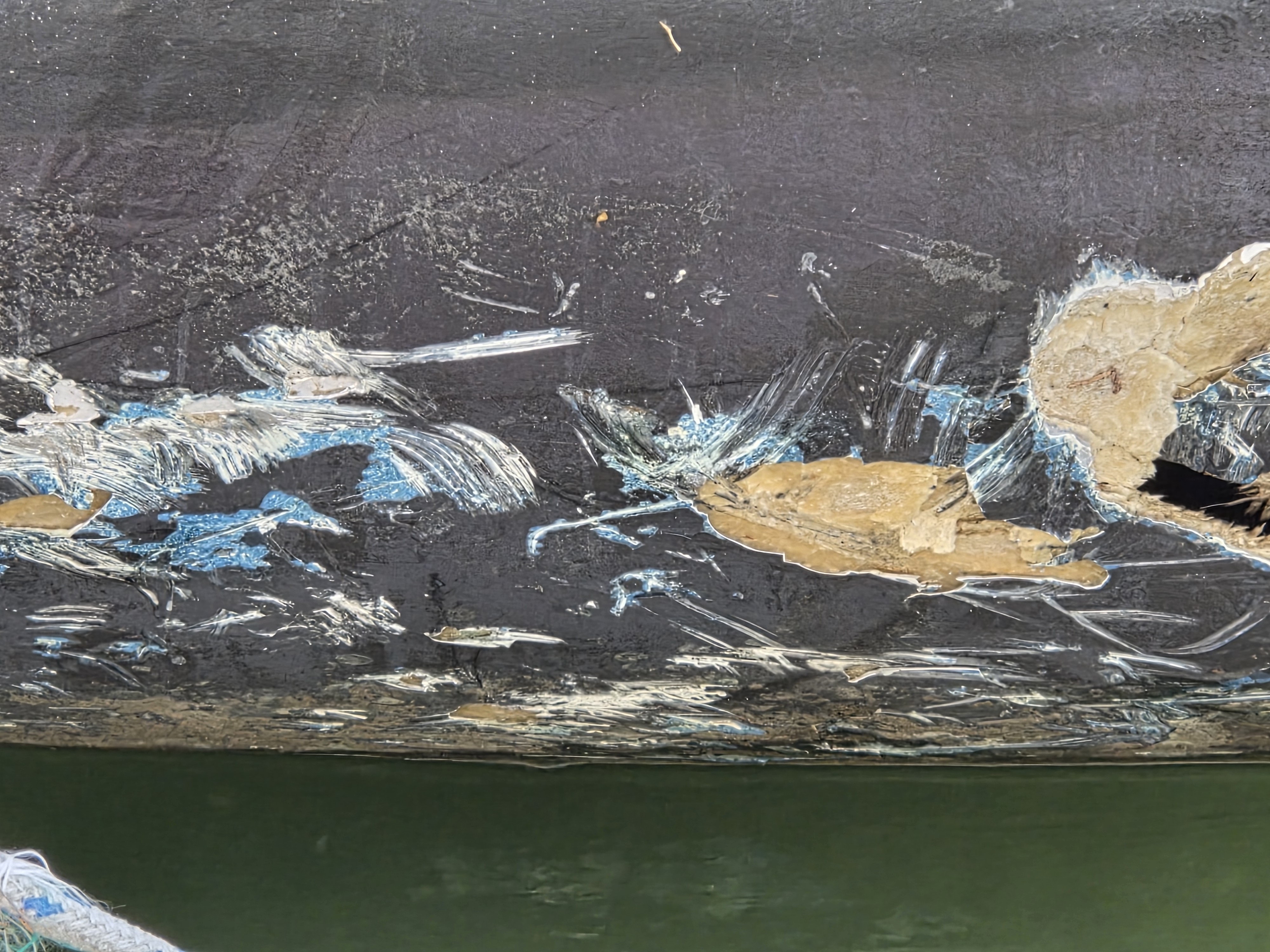
The full extent, running along the keel. This wasn't a single impact. The boat had been ground along the rocks, stripping antifouling back to bare fibreglass — damage that ran for metres along the bottom of the hull.

Below decks. Flooded bilge, corroded wiring, mud across every surface. Every system that BoatMind now monitors — the battery, the bilge, the electrics — had been reached by the water that came through those holes.
⚓
Act Two · What Followed
The repairs completed, the boat refloated. Back on a mooring. Wounded but still afloat — which is more than many vessels in that storm could say.
What followed reinforced the same lesson: Queensland boat owners have no affordable, reliable way to monitor their unattended vessels in real time. The products that exist are expensive, limited, and built overseas for different conditions. None of them understand Moreton Bay. None of them aggregate data across vessels to build a picture of what is actually happening on the water.
The gap that no product fills
Every time a Queensland boat drags its mooring, the owner finds out one of three ways: a phone call from a stranger who noticed, a harbourmaster's report, or their own eyes when they arrive at an empty mooring.
None of those three things happen in time to prevent the damage. They happen after. BoatMind is the alert that happens before — the moment the GPS moves, the moment the bilge pump runs unexpectedly, the moment the mooring takes a jolt that exceeds normal wave activity.
Early action is the difference between a recovered vessel and a total loss. BoatMind gives owners the chance to take it.
The reason it exists
I am not a technology company that identified a market gap.
I am a boat owner who lived the consequence of that gap. That distinction matters — because every feature in this system was designed around a real failure, not a spreadsheet.
BoatMind is built for Queensland waters, by someone who has watched what happens when those waters turn without warning. It is built so that the next owner who gets that phone call — or the one after that — already knew.
Explore BoatMind
Steve Utting · Founder, BoatMind · Brisbane, Queensland